

Last Updated on January 15, 2026
Mini wireless microphones are no longer a “nice-to-have” accessory. In 2026, they are core gear for vloggers, streamers, short-form creators, educators, and mobile-first professionals who record more content on phones than on cameras.
What changed is not just size. It’s an expectation.
Creators now expect:
- Clean voice capture without post-processing
- Plug-and-play reliability across phones and cameras
- All-day portability with charging cases
- Noise reduction that helps, not harms, the voice
At the same time, the market is flooded with near-identical wireless mics that look good on spec sheets but fail in real use unstable connections, aggressive AI noise reduction, weak clips, or batteries that don’t hold up after a few weeks.
This guide cuts through that noise.
Instead of repeating manufacturer specs or paid hype, this article focuses on real-world performance, long-term usability, and clear trade-offs. The goal is simple: help you choose a mini wireless microphone in 2026 that fits how you actually create content, not how brands want you to buy.
What Changed in Mini Wireless Microphones by 2026
If you’re relying on advice from 2023 or early 2024, you’re already behind. Mini wireless microphones have evolved quickly, and several shifts matter directly to buyers today.
USB-C Is No Longer Optional
With USB-C now standard across most smartphones, including newer iPhones, wireless mics that rely on outdated connectors or fragile adapters feel clumsy. In 2026, native USB-C support is table stakes, not a bonus.
Charging Cases Became the Norm
Loose receivers and cables are increasingly rare. Compact charging cases now:
- Extend total battery life
- Protect connectors during travel
- Reduce setup friction
Mics without a proper case often feel outdated and inconvenient in daily use.
AI Noise Reduction Is Everywhere and Risky
Nearly every new mini wireless mic advertises “AI noise cancellation.” In practice, results vary wildly. Some systems remove background noise naturally. Others over-process voices, making speech sound thin, robotic, or unnatural.
In 2026, noise reduction quality matters more than raw audio specs.
Mobile-First Creation Dominates
Short-form video, live streams, and on-the-go recording dominate content creation. That shifts priorities away from studio-grade perfection toward:
- Fast setup
- Stable wireless performance while moving
- Clips that stay secure on clothing
Size Matters Again for the Camera
Creators are more camera-aware. Bulky transmitters ruin framing, reflections, and aesthetics. The best mini mics now focus on low-profile designs that disappear on camera instead of drawing attention.
Who Mini Wireless Microphones Are For (and Who Should Skip Them)
Mini wireless microphones are powerful tools but they are not universal solutions. Understanding whether you actually need one prevents buyer regret.
Mini Wireless Mics Are Ideal For:
- Vloggers & YouTubers recording on phones or compact cameras
- Short-form creators (Reels, Shorts, TikTok) who move while filming
- Educators & coaches recording talking-head content
- Interview-style content with one or two speakers
- Travel creators who need portability and speed
They May Not Be Right If You:
- Record podcasts in a controlled studio
- Need multi-mic setups with 4+ speakers
- Prioritize music or broadcast-grade audio
- Already use XLR or dedicated audio interfaces
Mini wireless microphones trade absolute audio control for convenience, speed, and mobility. If those matter more than studio perfection, you’re in the right category.
How to Choose the Best Mini Wireless Microphone in 2026
(What Actually Matters and What Usually Doesn’t)
Choosing a mini wireless microphone in 2026 is less about specs and more about how the mic behaves in real situations. Many models look identical on paper, but small differences in design, processing, and reliability determine whether a mic becomes part of your daily workflow or ends up unused in a drawer.
Below are the factors that genuinely separate good mini wireless microphones from frustrating ones, explained in different ways on purpose, because not every decision is made the same way.
1. Real-World Audio Quality Comes Before Everything Else
The primary job of a mini wireless microphone is simple: make your voice sound clear and natural without editing. Studio-grade specs do not matter if spoken words sound thin, harsh, or muffled once recorded.
In real use, audio quality is shaped by how well the mic handles plosives, breath sounds, and subtle head movements. A good mini wireless mic preserves vocal warmth while keeping speech intelligible, even when you’re walking or turning your head. If the voice sounds acceptable only after heavy post-processing, the mic is not doing its job.
This matters more than range, codecs, or advertised frequency response.
2. Noise Reduction: Helpful Tool or Silent Deal-Breaker?
On paper, AI noise reduction sounds like a feature you always want. In practice, it’s one of the biggest reasons creators regret their purchase.
Some mini wireless microphones remove background hum and wind while leaving the voice intact. Others aggressively strip out ambient sound and take parts of your voice with it, creating a compressed or robotic tone.
In 2026, the question is not whether a mic has noise reduction, but how intelligently it applies it. Subtle noise control beats aggressive “AI magic” every time.
3. Device Compatibility Without Adapter Friction
Before looking at sound or features, confirm this:
- Works natively with USB-C phones
- Supports both mobile and camera setups (if needed)
- Does not rely on fragile dongles
- Maintains a solid physical connection
If a mini wireless mic requires multiple adapters to function, it adds friction every time you record. In a mobile-first world, direct compatibility is part of audio quality, not a bonus feature.
4. Wireless Stability Matters More Than Claimed Range
Manufacturers love to advertise long transmission ranges. In reality, most creators never record at extreme distances. What actually matters is stability in normal environments: busy streets, offices, cafes, and homes filled with wireless interference.
A reliable mini wireless microphone maintains a steady signal while you move, turn, or briefly obstruct line-of-sight. Occasional dropouts are forgivable. Unpredictable audio loss is not.
If a mic cannot hold a stable connection during a simple walking shot, no range spec can save it.
5. Battery Life Is a Long-Term Trust Issue
Battery performance is where many mini wireless microphones quietly fail after a few weeks.
Look beyond advertised numbers. What matters is how long the mic lasts per charge, whether the charging case actually delivers multiple reliable recharges, and how quickly battery capacity degrades over time. Short battery life doesn’t just interrupt recording—it changes how confidently you use the mic.
A mini wireless mic you constantly worry about charging is not truly portable.
6. Size, Clip Design, and On-Camera Presence
“Mini” is not only about weight or dimensions. It’s about how the mic behaves when clipped to real clothing and seen on camera.
A good mini wireless microphone:
- Stays secure without pulling fabric
- Doesn’t rotate or sag during movement
- Looks discreet on camera
Poor clip tension, bulky housings, or glossy finishes quickly become distractions—both for you and for your audience.
7. Setup Simplicity vs App Dependency
Some creators enjoy fine-tuning settings through apps. Others just want to record and move on.
Plug-and-play mini wireless microphones reduce friction and failure points. App-dependent systems can offer more control, but they also introduce risks: buggy updates, forced firmware changes, or broken compatibility after phone OS updates.
In 2026, simplicity is not a limitation—it’s often a reliability advantage.
8. Build Quality and Brand Support Decide Long-Term Value
Most mini wireless microphones sound fine on day one. The real question is how they hold up over time.
Weak clips, loose charging ports, flimsy cases, and abandoned apps are the most common long-term issues. Brand support matters more than many buyers expect, especially when firmware updates or replacements are needed.
A slightly more expensive mic from a brand that maintains updates and support often costs less frustration in the long run.
9. Price-to-Value Ratio (Not Price Alone)
The best mini wireless microphone is not the cheapest, nor the most expensive. It’s the one that delivers consistent audio, minimal friction, and dependable performance for how you create content.
Every lower price comes with a compromise. The key is knowing which compromise you are consciously accepting, rather than discovering it after purchase.
Best Mini Wireless Microphones of 2026 (Quick Decision View)
| Product | Best For | Audio Quality | Noise Reduction | Battery (Real Use) | Device Support | Biggest Limitation |
| DJI Mic Mini | All-round creators | Excellent, natural | Strong & balanced | Long + case | Phone + camera | Premium price |
| RØDE Wireless Micro | Phone-only vloggers | Very clean | Moderate | Shorter | Smartphone only | No camera support |
| Hollyland Lark M2 | Balanced creators | Very good | Good | Reliable | Multi-device | Slightly larger |
| BOYA Mini 2 | Budget buyers | Decent | Aggressive AI | Average | Phone-first | Over-processing |
| SYNCO P1X | Beginners | Good for size | Basic | Short | Mobile | Limited range |
| NEEWER KM23 | Budget alternative | Acceptable | Basic | Average | Multi-device | Build quality |
| Maono Wave T5 | Feature seekers | Good | App-dependent | Good | Multi-device | Setup friction |
| Ulanzi J12 | Ultra-mini use | Fair | Minimal | Short | Mobile | Not pro-grade |
Top 8 Mini Wireless Microphones of 2026
(Detailed, reality-based reviews)
1. DJI Mic Mini
Best Overall Mini Wireless Microphone (2026)
This is the mic you give to someone who doesn’t want to think about audio and that’s exactly why it works so well.
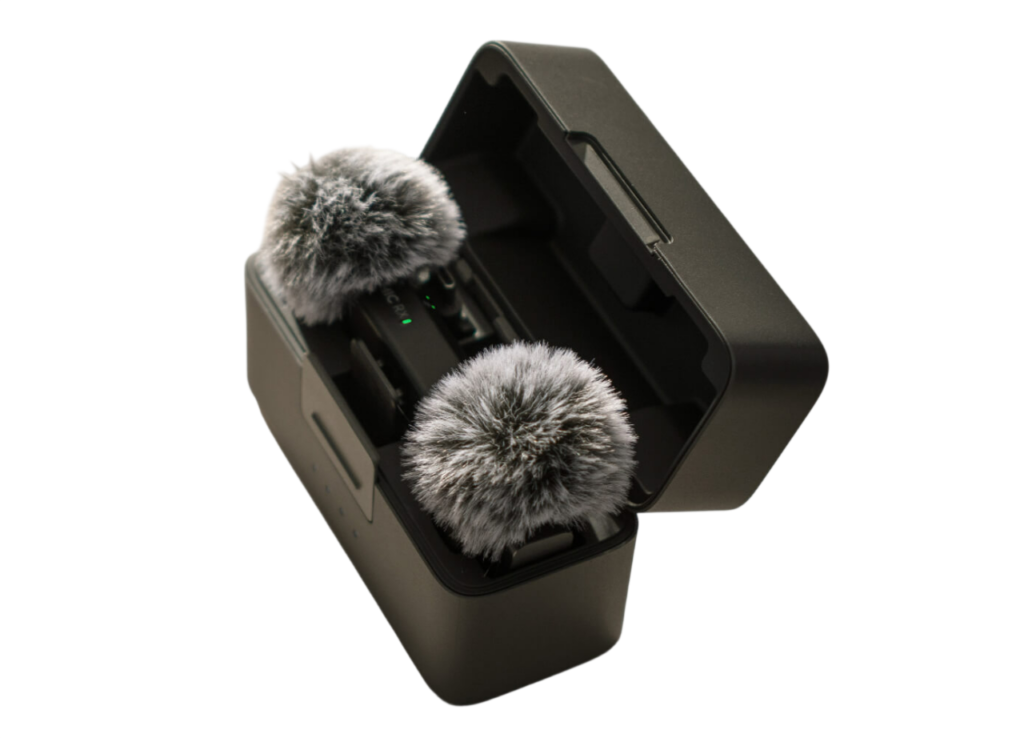
In real use, the DJI Mic Mini feels calm and predictable. You clip it on, it connects instantly, and the audio just sounds right. Voices come through clean and natural without that over-processed “AI noise reduction” sound that cheaper mini wireless mics often suffer from. Outdoors or in mildly noisy spaces, it stays composed instead of fighting your voice.
The charging case plays a bigger role than it seems. It changes behavior. You stop worrying about battery levels and start using the mic more often, which is the whole point of a portable system.
What it does well
- Natural-sounding voice with restrained noise reduction
- Very stable wireless performance while moving
- Charging case makes daily use effortless
- Works reliably with both phones and cameras
Where it falls short
- Costs more than most “mini” wireless mics
- Not the smallest transmitter on this list
- Lacks advanced features like 32-bit float recording
Technical snapshot (contextual)
- Wireless: 2.4GHz digital
- Audio: 16-bit / 48kHz (voice-optimized)
- Battery: ~5–6 hours per charge; extended to multiple sessions with charging case
- Compatibility: USB-C phones + cameras
Who should buy it
Creators who want the safest all-round choice and value reliability over chasing specs.
Who should skip it
Ultra-budget buyers or creators who want the absolute smallest transmitter possible.
Verdict
If you want a mini wireless microphone that simply works every time, this is the benchmark in 2026.
2. RØDE Wireless Micro
Best Mini Wireless Microphone for Phone-Only Creators
This mic makes sense the moment you stop trying to make it something it isn’t.
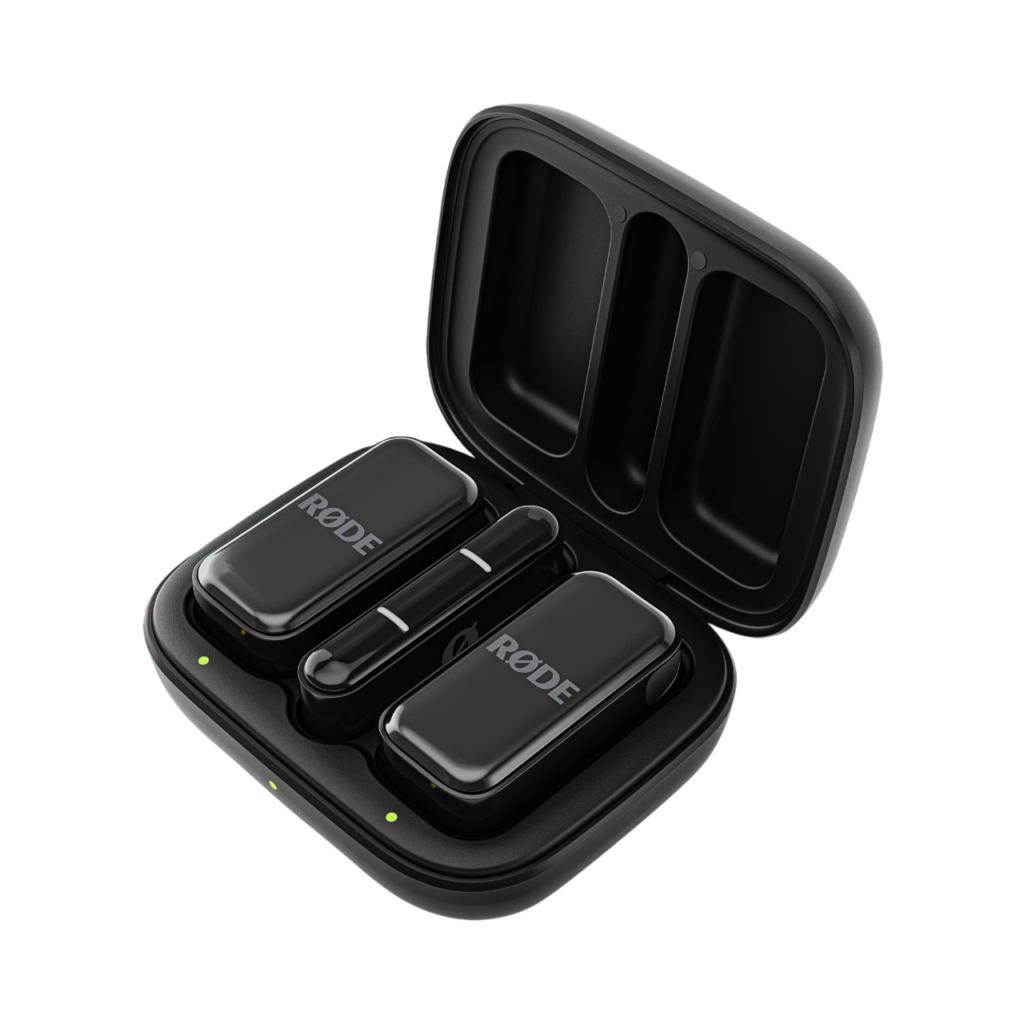
The RØDE Wireless Micro is built for creators who record almost everything on a phone and want audio that’s clean, fast, and predictable without carrying extra gear. It doesn’t try to be a hybrid system. It doesn’t chase pro features. It just focuses on removing friction from mobile recording and that focus is exactly why it works.
In real use, the audio is clean and controlled. Voices sound clear without the sharp, over-processed edge that budget mini mics often add. Noise reduction is present but conservative, which helps speech stay natural indoors and in everyday outdoor settings. You won’t get dramatic background suppression, but you also won’t get robotic artifacts.
Where this mic really shines is speed. There’s almost no setup thinking involved. You plug it into your phone, clip it on, and record. For creators who shoot frequently and casually daily vlogs, Shorts, Reels, Stories that matters more than chasing advanced specs.
What it does especially well
- Very clean, natural voice for smartphone recording
- Extremely compact and discreet on camera
- Minimal setup no app dependency for basic use
- Lightweight and comfortable for long wear
Where the limits show
- Designed strictly for smartphones
- Battery life is fine for short sessions, not all-day shooting
- No expansion path for cameras or external mics
Technical snapshot (contextual)
- Wireless: 2.4GHz digital
- Audio: Voice-optimized wireless audio
- Battery: ~4–5 hours per charge, best suited for short recording sessions
- Compatibility: Smartphones only (USB-C / phone-centric)
Who should buy it
Creators who film primarily on phones and value simplicity, speed, and clean audio over flexibility.
Who should skip it
Anyone planning to use cameras, longer recording sessions, or future audio upgrades.
Verdict
If your entire workflow lives on a phone and you want audio that stays out of the way, the RØDE Wireless Micro is one of the cleanest, least stressful options in 2026.
3. Hollyland Lark M2
Best Balanced Mini Wireless Microphone (The “Middle-Ground” Pick)
If you’re the kind of creator who doesn’t want extremes, not the cheapest, not the flashiest, not the tiniest, the Lark M2 makes sense almost immediately.

This mic feels like it was designed by people who watched creators struggle with small annoyances and quietly fixed them. Nothing about it screams for attention, and that’s the point. You clip it on, start recording, and it behaves predictably. Audio comes through clean and controlled, without the heavy-handed noise reduction that can make budget mics sound artificial.
What stands out in real use is consistency. Indoors, voices sound full and stable. Outdoors, it doesn’t panic when background noise creeps in. It’s not as “polished” sounding as DJI’s processing, but it also doesn’t overcorrect. For talking-head videos, interviews, and general vlogging, that balance is refreshing.
The size is slightly larger than ultra-mini options, but the trade-off is better clip security and fewer accidental drops. For many creators, that’s a win.
Where it quietly does well
- Natural, dependable voice reproduction
- Noise control that doesn’t crush speech
- Stable wireless performance in everyday environments
- Solid clip design that feels secure
Where it won’t impress spec chasers
- Not the smallest transmitter on camera
- Lacks headline-grabbing “pro” features
- Design is practical, not stylish
Technical snapshot (contextual)
- Wireless: 2.4GHz digital
- Audio: Standard voice-focused wireless format
- Battery: ~6 hours per charge; reliable for typical shooting days with case support
- Compatibility: Phones and cameras
Who should buy it
Creators who want a dependable mini wireless mic that works across different setups without fuss.
Who should skip it
Those who want the smallest possible mic or cutting-edge features for niche workflows.
Verdict
The Hollyland Lark M2 isn’t trying to win on specs or hype. It wins by being steady, balanced, and easy to live with which is exactly why many creators end up keeping it long-term.
4. BOYA Mini 2
Best Budget Mini Wireless Microphone (Expectation-Setting Pick)
This is the mic that forces an honest conversation about price versus patience.
The BOYA Mini 2 exists for creators who want to go wireless without spending much and in that context, it actually does a respectable job. When you clip it on and start talking, the audio is clear enough for casual content, social videos, and everyday vlogging. It’s not polished, but it’s usable, which is exactly why it’s popular.
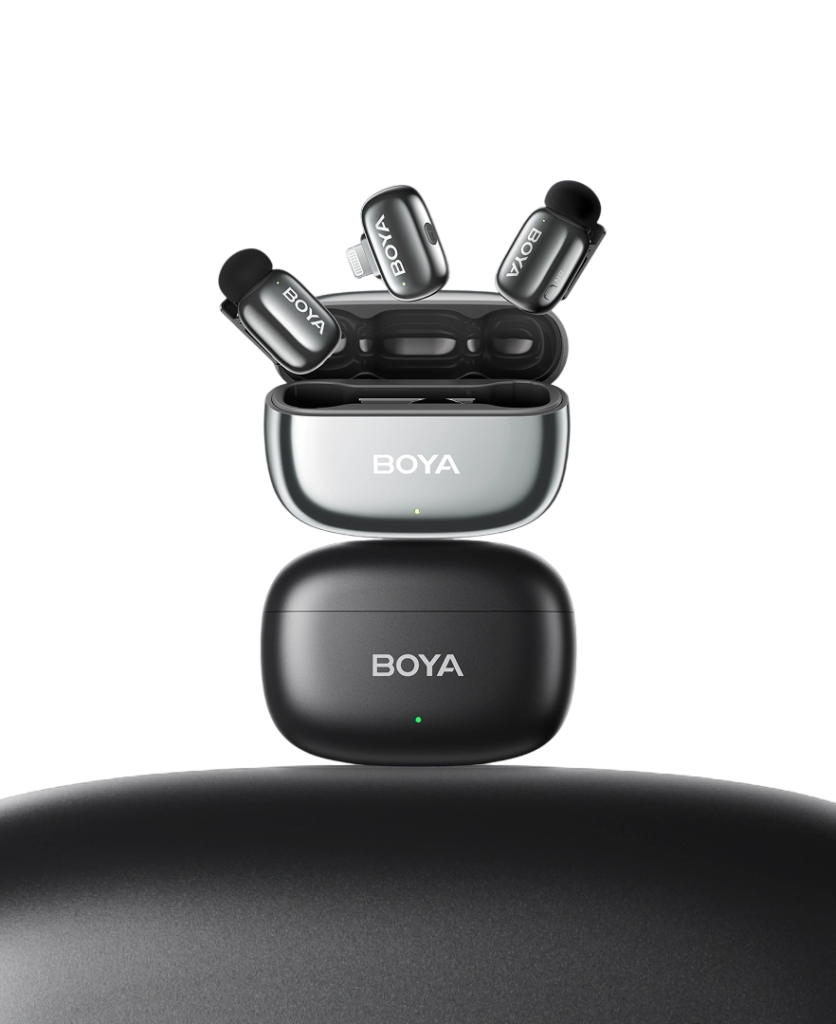
Where the experience becomes very “BOYA” is in how the mic handles noise. The built-in AI noise reduction is aggressive. In loud environments, that can feel like a win because background sounds drop quickly. In quieter settings, though, the processing can be obvious. Voices sometimes lose warmth, and speech can sound slightly compressed or artificial.
This is the trade-off budget buyers often don’t realize until after purchase.
The physical design is lightweight and comfortable, but it doesn’t feel premium. Clips are fine, not confidence-inspiring. Battery performance is acceptable, but not something you forget about the way you can with higher-end models.
Where it makes sense
- Affordable entry into wireless audio
- Clear enough voice for casual content
- Strong background noise suppression in busy places
- Simple setup for beginners
Where the compromises show
- Noise reduction can over-process voices
- Audio lacks depth compared to pricier options
- Build quality feels basic
- Not ideal for nuanced or professional voice work
Technical snapshot (contextual)
- Wireless: 2.4GHz digital
- Audio: Standard wireless voice capture with AI noise reduction
- Battery: ~4–5 hours per charge; extended use depends heavily on charging case
- Compatibility: Phone-first setups
Who should buy it
Beginners, students, or creators who want the cheapest functional way to go wireless.
Who should skip it
Anyone sensitive to audio quality or planning to use the mic for professional or client-facing content.
Verdict
The BOYA Mini 2 is not a hidden gem, it’s a compromise. If you understand that going in, it can be a perfectly reasonable budget choice. If you expect a premium sound, it will disappoint.
5. SYNCO P1X
Best Entry-Level Mini Wireless Microphone (Beginner-Friendly Pick)
This is the mic for creators who are crossing the line from “phone audio is fine” to “I should probably take audio seriously”but don’t want complexity to slow them down.
The SYNCO P1X feels intentionally simple. You clip it on, connect it to your phone, and start recording. There’s no sense that you’re managing a system; it behaves more like an accessory that quietly does its job. For indoor recordings, talking-head videos, and casual vlogs, the voice comes through clean enough to feel like a real upgrade over built-in phone microphones.
Where it shows its entry-level nature is when conditions get tougher. Outdoors or in busy environments, noise handling is basic. It doesn’t aggressively clean backgrounds, but it also doesn’t introduce strange artifacts. The result is honest audio that reflects the environment you’re in—for better or worse.
Physically, the P1X is light and unobtrusive. It’s comfortable for longer clips and doesn’t pull on clothing, though the clip doesn’t inspire the same confidence as more premium options. Battery life is adequate for short sessions but not something you forget about entirely.
Why beginners like it
- Simple, low-stress setup
- Noticeable improvement over phone audio
- Lightweight and comfortable to wear
- No heavy processing or strange voice effects
Where its limits appear
- Basic noise handling in loud environments
- Modest battery life
- Clip and materials feel entry-level
- Not designed for demanding outdoor use
Technical snapshot (contextual)
- Wireless: 2.4GHz digital
- Audio: Straightforward voice capture, minimal processing
- Battery: ~3.5–4.5 hours per charge; suited for short sessions
- Compatibility: Mobile-first setups
Who should buy it
First-time creators who want a small, affordable wireless mic without learning curves or advanced settings.
Who should skip it
Creators who regularly record outdoors, need longer battery life, or want more refined audio control.
Verdict
The SYNCO P1X isn’t trying to impress, it’s trying to get you started. If you want a gentle, affordable step into wireless audio without overthinking it, this mic does exactly that.
6. NEEWER KM23
Best Budget Alternative with Broader Compatibility
This is the mic people end up buying when they want flexibility on a budget not because it’s exciting, but because it checks enough boxes to feel safe.
The NEEWER KM23 setup is straightforward, compatibility is broader than many entry-level options, and it works across phones and cameras without making you feel locked into a single workflow. For creators who jump between devices, that alone is a reason it lands on shortlists.
In real use, the audio is… fine. Not impressive, not disappointing. Voices are intelligible and stable in indoor environments, but there’s less refinement compared to higher-end mini wireless microphones. Noise handling is basic, which means you hear more of the room but you also avoid the over-processed, robotic sound that aggressive AI noise reduction can cause.
Where the KM23 reveals its budget roots is in feel. The plastics are lighter, the clip doesn’t inspire total confidence, and the system doesn’t fade into the background the way premium models do. You’re more aware you’re using a piece of gear checking placement, watching for movement, managing expectations.
Why people choose it
- Works with both phones and cameras
- Straightforward, no-nonsense setup
- Acceptable voice quality for casual content
- Competitive pricing for a dual-device system
Where compromises show
- Audio lacks polish compared to premium options
- Basic noise handling in busy environments
- Build quality feels utilitarian
- Clips require a bit more care when moving
Technical snapshot (contextual)
- Wireless: 2.4GHz digital
- Audio: Standard wireless voice capture
- Battery: ~4–6 hours per charge; average real-world endurance
- Compatibility: Mobile devices and cameras
Who should buy it
Creators who want one affordable wireless mic that works across multiple devices without brand lock-in.
Who should skip it
Anyone prioritizing premium audio quality, ultra-compact design, or a “set-it-and-forget-it” experience.
Verdict
The NEEWER KM23 isn’t a standout it’s a stabilizer. If you want flexibility on a tight budget and understand the trade-offs, it does its job without drama.
7. Maono Wave T5
Best Feature-Heavy Mini Wireless Microphone (Control-First Pick)
This is the mic for creators who like to tweak.
The Maono Wave T5 leans into features, settings, and app-based control. If you enjoy dialing things in adjusting noise reduction, checking levels, and customizing behavior this mic gives you that sense of involvement.
In real-world recording, the audio quality is solid. Voices sound clear and present, and when conditions are controlled, it performs well enough for most talking-head and vlog content. Where things get more complicated is consistency. Because processing and behavior are tied closely to the app, your experience depends on how well everything stays in sync — firmware, phone OS, and app updates.
That’s not necessarily bad, but it is a mindset shift. This mic rewards creators who like to check settings before hitting record. It’s less forgiving for those who want instant, no-thought recording.
Physically, the Wave T5 sits comfortably in the “mini but noticeable” category. It’s not bulky, but it’s not invisible either. Battery performance is respectable, especially when managed properly through the app, but again you’re managing it.
Where it shines
- App-based control for creators who like customization
- Clear, present voice quality in controlled environments
- Flexible connectivity across devices
- More features than most budget mini wireless mics
Where friction appears
- App dependency adds setup and maintenance overhead
- Firmware or OS updates can affect reliability
- Not a true plug-and-play experience
- Slightly more visible on camera than ultra-mini options
Technical snapshot (contextual)
- Wireless: 2.4GHz digital
- Audio: Standard wireless voice capture with app-controlled processing
- Battery: ~6 hours per charge with active management through the app
- Compatibility: Phones and cameras (with app involvement)
Who should buy it
Creators who enjoy control, customization, and don’t mind using an app as part of their workflow.
Who should skip it
Anyone who wants a frictionless, grab-and-record mini wireless microphone.
Verdict
The Maono Wave T5 is not the simplest option and that’s the point. If you value features and control over pure convenience, it offers a lot for the price. If you don’t, it can feel like unnecessary work.
8. Ulanzi J12
Best Ultra-Compact Mini Wireless Microphone (Social-First Pick)
This is the mic you choose because you don’t want a mic to be seen.
The Ulanzi J12 is unapologetically tiny, and that single decision defines everything about it. For creators filming quick Shorts, Reels, TikToks, or casual walk-and-talk clips, the J12 blends into clothing and framing better than most mini wireless options. On camera, it’s discreet. In a pocket, it’s forgettable. That invisibility is its biggest strength.
In real use, audio quality is serviceable rather than impressive. Voices are clear enough for social platforms, especially indoors or in calm environments, but there’s less headroom than with more expensive models. Noise handling is minimal, which means you hear more of the environment sometimes that’s fine, sometimes it’s limiting. The upside is that voices don’t get mangled by aggressive processing.
Wireless performance is stable at close range, which matches how this mic is meant to be used. It’s not designed for long distances or complex setups; it’s designed for fast, casual recording where speed and aesthetics matter more than polish.
Why creators pick it
- Extremely small and discreet on camera
- Fast, low-friction setup for social content
- Lightweight and comfortable for short recordings
- No heavy processing or artificial voice effects
Where the trade-offs are obvious
- Audio quality is basic compared to premium options
- Limited noise control outdoors
- Shorter battery life
- Not suited for professional or long-form work
Technical snapshot (contextual)
- Wireless: 2.4GHz digital
- Audio: Basic wireless voice capture
- Battery: ~3–4 hours per charge; intended for short recording sessions
- Compatibility: Mobile-first (phone-centric workflows)
Who should buy it
Social-first creators who prioritize size, appearance, and speed over audio refinement.
Who should skip it
Anyone recording long sessions, working in noisy environments, or aiming for professional-grade voice quality.
Verdict
The Ulanzi J12 isn’t trying to compete with premium mini wireless microphones it’s solving a different problem. If your priority is staying invisible on camera while capturing usable audio for short content, it does exactly that.
Quick Picks (Fast Decisions, No Overthinking)
- Best Overall: DJI Mic Mini
The safest long-term choice if you want reliable audio without thinking about settings, adapters, or battery anxiety. - Best for Phone-Only Creators: RØDE Wireless Micro
Clean, simple, and fast ideal if your entire workflow lives on a phone. - Best Balanced Pick: Hollyland Lark M2
Practical and dependable, with fewer compromises than most mid-priced options. - Best Budget Option: BOYA Mini 2
Works if you accept the limitations; frustrating if you expect premium sound. - Best for Beginners: SYNCO P1X
A gentle entry into wireless audio without setup stress or feature overload. - Best Budget Alternative (Multi-Device): NEEWER KM23
A flexible, affordable option if you move between phones and cameras. - Best Feature-Heavy Choice: Maono Wave T5
Good for creators who like control and don’t mind app-based workflows. - Best Ultra-Compact / Social-First: Ulanzi J12
Chosen for invisibility on camera, not for audio perfection.
Common Buying Mistakes When Choosing a Mini Wireless Microphone
(And How to Avoid Them in 2026)
Below are the most common mistakes buyers make, why they happen, and how to avoid them before clicking buy
Believing “Up To” Battery and Range Claims
This is where people lie to themselves.
- “Up to 200m range”
- “Up to 48 hours battery”
- “Studio-quality sound”
None of these describe how the mic behaves in normal use. They describe perfect conditions that almost never exist.
What actually matters
- Per-charge battery life, not total case math
- Stability while moving, not open-field range
- Voice consistency, not spec-sheet promises
If a mic barely fits your needs on paper, it won’t feel comfortable in real life.
Assuming Smaller Microphones Are Always Better
Ultra-small mics look great in photos and that’s where the advantage often ends.
Smaller usually means:
- Shorter battery life
- Lighter (weaker) clips
- Less tolerance for movement and noise
That doesn’t make them bad. It just makes them specialized.
Real decision to make: Do you want invisibility on camera, or fewer compromises while recording?
Falling for Aggressive AI Noise Reduction
This mistake doesn’t show up immediately. It shows up when you listen back weeks later.
- Voices start sounding flatter
- Tone changes between recordings
- Background noise “fights” your speech
Here’s the uncomfortable truth: Subtle noise control ages better than dramatic demos.
If “AI noise cancellation” is the main selling point, be cautious.
Buying Phone-Only Wireless Microphones Without Planning for Growth
Many creators swear they’ll never use a camera until they do.
Phone-only mics are convenient, but:
- They lock you into one workflow
- They limit future upgrades
- They’re hard to resell later
If there’s even a small chance you’ll expand, flexibility is worth paying for.
Expecting One Microphone to Handle Every Scenario
This is the quietest mistake and the most common.
You can’t realistically get:
- Ultra-small size
- Long battery life
- Strong noise reduction
- Natural voice
- Low price
…all at once.
Good purchases happen when you choose which compromise you’re okay living with.
Frequently Asked Questions (FAQ)
Are mini wireless microphones good enough for professional content?
Yes, for voice-based content like vlogs, interviews, tutorials, and social videos. They are not designed for music recording, broadcast production, or multi-mic studio setups. If your content relies on clear speech, modern mini wireless mics are more than capable.
Do mini wireless microphones work with both iPhone and Android?
Most current models support USB-C phones, which covers Android and newer iPhones. Some are phone-only, while others also work with cameras. Always check compatibility before assuming flexibility.
Is Bluetooth the same as wireless microphones?
No. Most mini wireless microphones use 2.4GHz digital wireless, not Bluetooth audio. That’s why they offer better stability, lower latency, and more consistent sound than Bluetooth mics.
How important is noise reduction?
Less important than marketing suggests.
Good noise reduction should:
- Reduce hum and background presence
- Leave the voice intact
Aggressive noise reduction often causes robotic or flat-sounding speech. Subtle processing ages better.
How long do mini wireless microphones really last on a charge?
In real-world use:
- 3.5 to 6 hours per charge is typical
- Charging cases extend this across multiple sessions
If you regularly record long, uninterrupted sessions, battery life should be a priority.
Can I use one mini wireless mic for interviews?
Some systems support dual transmitters, but many mini mics are best for one speaker. For frequent interviews, choose a system explicitly designed for two-person recording.
Are more expensive mini wireless mics always better?
No, but they are usually more predictable.
Higher-priced options tend to offer:
- Better wireless stability
- More consistent audio processing
- Better long-term durability
Budget options can work well if you understand their limits.
What’s the biggest mistake first-time buyers make?
Expecting one mic to:
- Be ultra-small
- Have long battery life
- Sound professional
- Handle noise perfectly
- Cost very little
Every choice involves a compromise. Knowing which one you’re accepting matters more than specs.
Final Verdict
In 2026, the best mini wireless microphone isn’t the one with the longest spec sheet, it’s the one that fits how you actually record. If you want the safest all-round choice with minimal friction, DJI Mic Mini is the most reliable pick. Phone-only creators who value speed and simplicity will be better served by RØDE Wireless Micro, while those wanting balance without extremes should look at Hollyland Lark M2. Budget options work but only if you accept their compromises upfront. The right choice comes down to one thing: pick the mic that adds the least friction to your workflow, not the one with the loudest marketing.


Leave a Reply